1. Prompt set
Agree the buyer questions, problem questions, reporting questions, and competitor questions worth tracking.
If buyers now ask ChatGPT, Claude, Gemini, Perplexity, or Google before they shortlist you, the report has to show more than rankings. It has to show where the brand appears, where competitors are cited, which URLs support the answer, and what gets fixed next.
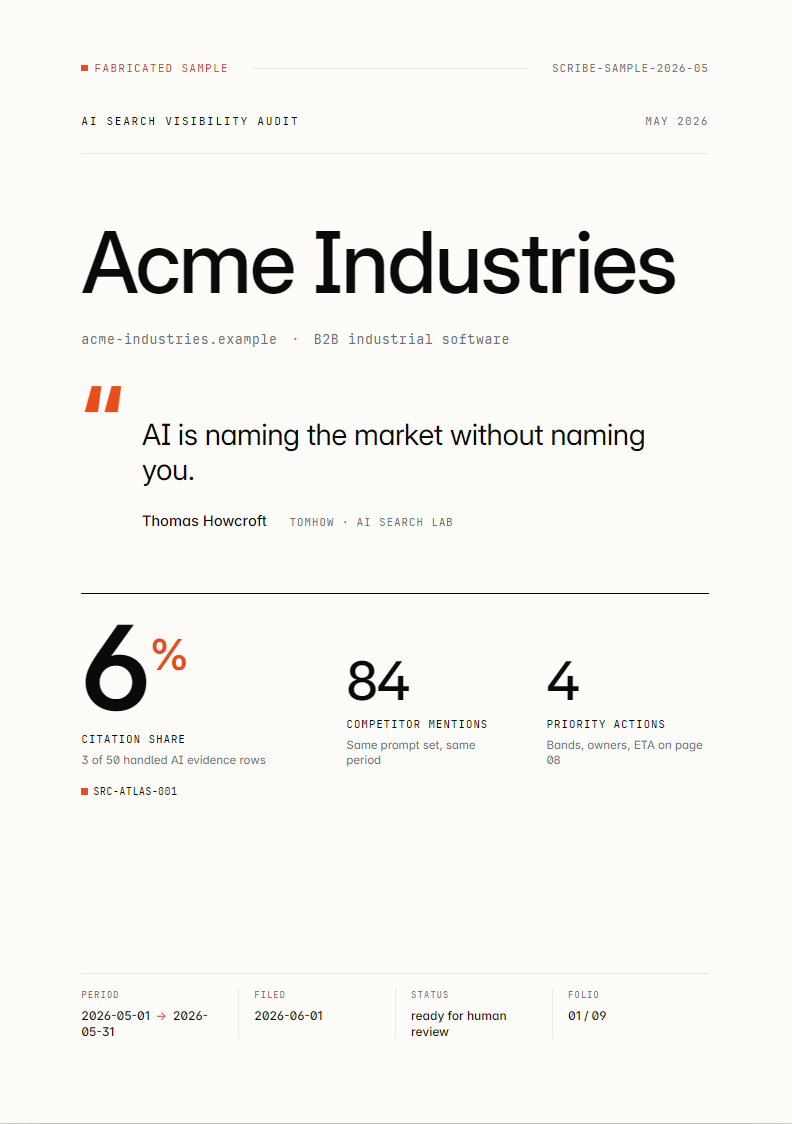
The proof asset is the fabricated public sample monthly report. It uses Acme Industries data only, so the format can be judged without exposing TomHow internal data, client data, or private project data. The next step is the paid audit, because that creates the prompt set, competitor baseline, technical findings, and first action plan.
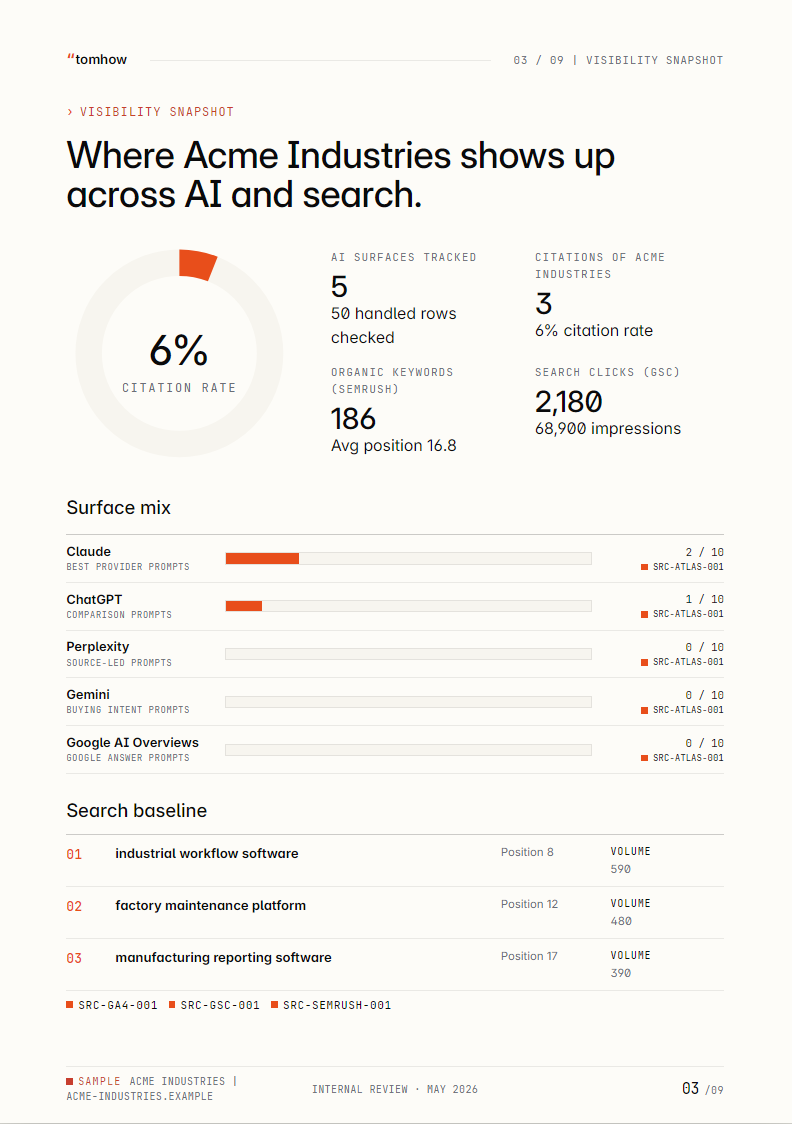
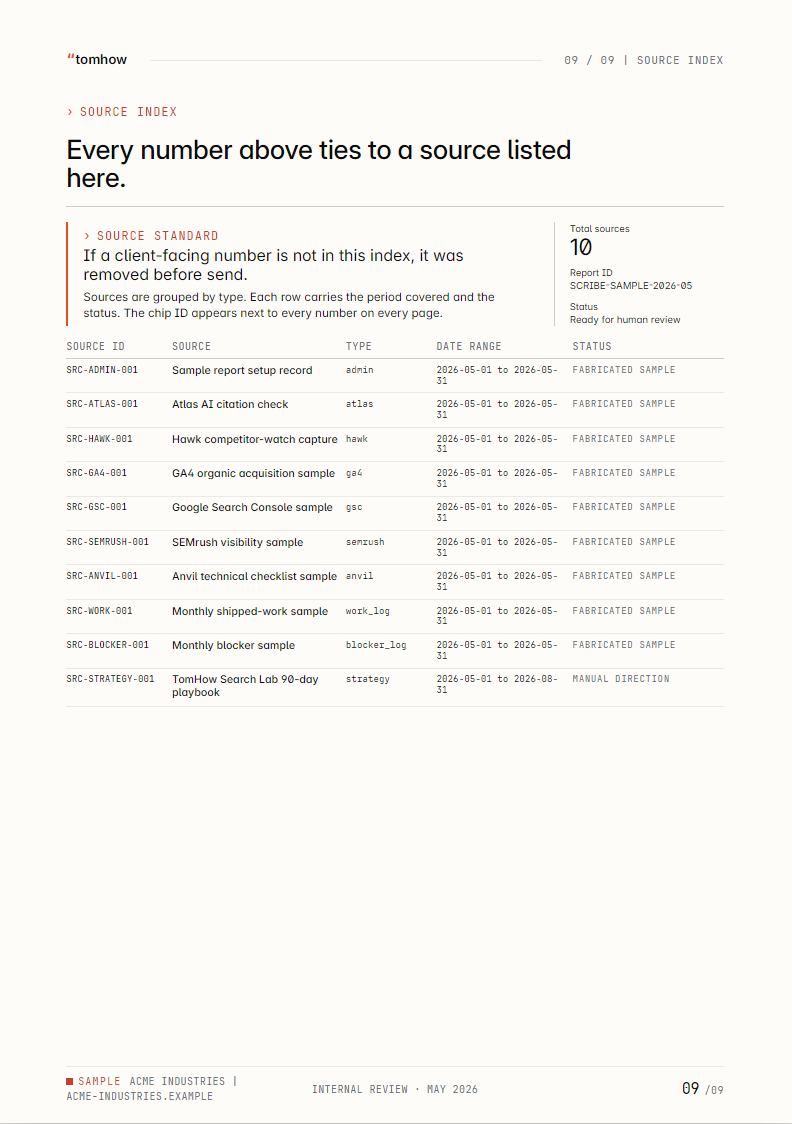
This is not outcome proof. The sample report shows the reporting format: executive summary, visibility snapshot, citation index, organic movement, shipped work, next actions, signature, and source index. The company, prompts, and numbers are fabricated.
A visibility report is only useful once the prompt set, platform checks, competitor list, technical findings, and evidence rules are fixed. The GBP 2,250 paid audit builds that baseline first.
Agree the buyer questions, problem questions, reporting questions, and competitor questions worth tracking.
Check the selected prompts across AI systems and record brand mentions, citations, competitors, source URLs, and limits.
Check access, page relevance, public facts and cited sources independently. Keep confirmed defects separate from possible explanations of missing citations.
Turn the evidence into the first work list: pages to fix, pages to publish, schema to add, and prompts to rerun.
These are platform requirements, not measured TomHow results. Google eligibility does not guarantee inclusion. OpenAI documents search access separately from training access. Check the current guidance before changing crawler controls or buying an optimisation claim.
An AI search visibility report should explain how the brand is being found, ignored, or replaced inside AI answers and search surfaces. It should not rely on one screenshot, one score, or one lucky prompt.
An AI citation tracking report records the prompt, platform, answer state, cited brand, cited URL where exposed, competitor, source type, and next move. That source row is what keeps the report honest.
A useful report states where the brand was absent, which sources appeared and what independently checked defects need attention. Absence alone does not identify a cause. Label possible explanations as hypotheses, give each action an owner and preserve enough detail to repeat the check. Keep the executive summary short and the appendix inspectable.
Keep search performance, website visits and answer observations separate. Search Console can show search exposure; GA4 can show measured visits; crawl checks can identify access defects. None alone explains why an AI answer omitted a brand. Use them together to prioritise independent checks rather than infer a single cause.
A completed answer that omits the brand records absence for that prompt and capture only. A failed request or an answer without exposed sources is a measurement limitation, not zero citation evidence. Inspect the intended page and cited sources before choosing a content, access or profile task. Preserve raw captures privately unless a separate public-safe version is approved.
If competitors keep appearing, the report should not stop at naming them. It should explain what public evidence they have that the audited brand lacks, then split the fix between owned pages and third-party corroboration.
A monthly report should show what shipped, what moved, what stayed missing, and what gets worked on next. Otherwise the report becomes theatre.
The executive summary can be short, but the appendix should let a sceptical buyer inspect the evidence. It should include raw rows, source notes, and clear limits.